
Take a closer look at MS and the immune system
The immune system is your body’s defense against infections and includes many types of cells. With multiple sclerosis (MS), the immune system attacks the body as if it were a harmful invader, like viruses or bacteria.
Role of the immune system in MS
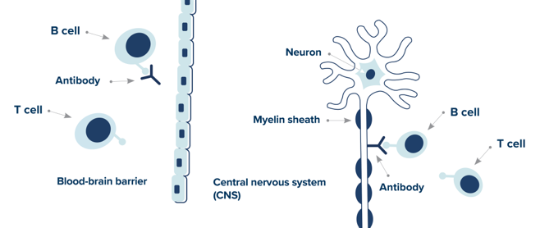
MS affects the cells of the central nervous system (CNS). The CNS contains the brain, the spinal cord, and nerve cells called neurons. These neurons are responsible for communication between the brain and the body. Neurons have nerve fibers (axons) that are protected by a fatty layer called the myelin sheath. Any damage to the myelin disrupts communication between the brain and the rest of the body.
The blood-brain barrier (BBB) usually prevents immune cells from entering the CNS. However, in MS, immune cells can cross the BBB and function abnormally. These overactive immune cells, called B cells and T cells, cross the BBB and cause inflammation that damages the myelin sheath of neurons. This damage is called demyelination.
B and T cells cross the
blood-brain barrier (BBB)

Does MS attack the immune system?
While MS is a disease of the immune system, it does not attack it. In fact, it is the other way around—the cells of the immune system start attacking the myelin sheath of neurons. The breakdown of this protective layer causes MS. This can lead to damage of the axons, which creates lesions or scars along the nerve. These lesions can be seen in an MRI scan.
Can immune system attacks in MS be prevented?
Immune system attacks in MS can't be prevented, but there are treatments that can help reduce how often these attacks (relapses) occur. These treatments, called disease-modifying therapies (DMTs), work in different ways to treat MS and affect the immune system differently. The immune system—including B cells and T cells—plays an important role in supporting the body’s natural defenses. In MS, however, these same cells can mistakenly damage the central nervous system (CNS). DMTs work by changing how the immune system responds, helping to reduce inflammation and reduce harmful attacks on the CNS. There are two types of DMTs: immunomodulators and immunosuppressants.
How do immunomodulators and immunosuppressants work in MS?
Immunomodulators work by modifying or adjusting specific parts of the immune response. Some immunomodulators affect immune cells, such as B cells and T cells, by changing how they function or communicate, or by making it harder for them to cross the blood–brain barrier and enter the CNS. This can shift the immune system from a more inflammatory state to a less inflammatory state, which may lower the number of immune cells attacking the nervous system and help reduce MS relapses. VUMERITY is considered to be an immunomodulator.
Immunosuppressants work by suppressing overall immune system activity. Some may act by reducing the number of immune cells, including B cells and T cells, which are involved in producing immune responses that can mistakenly attack the body’s own nerve cells in MS. This may help reduce MS relapses.
Your healthcare provider is your best source of information. Be sure to discuss the risks and benefits of both types of DMTs and how they may affect the health of your immune system over time, including increased risk of infection.
Frequently asked questions
Is MS an immune system
disorder?
Yes, MS is a disorder of the immune system and is classified as an autoimmune disease (a condition where the body’s immune system attacks its own cells).
Is MS an overactive
immune system?
MS is caused by an overactive immune system that attacks the cells of the CNS. This immune response causes inflammation and damage, particularly to the myelin sheath surrounding nerve fibers. The damage to the nervous system disrupts signals from the brain and the spinal cord to the body and vice versa.
Is MS considered an immunosuppressive disease?
No, MS patients are not immunosuppressed due to their condition. MS is considered an autoimmune disorder, a disease where the immune system attacks the body’s own cells.
Do people with MS have a
weakened immune
system?
MS by itself does not compromise the immune system. It causes immune system dysregulation, where the body’s immune cells attack the central nervous system. However, some MS treatments can reduce the activity of the immune system, which can lead to a weakened ability to fight infections.
As you age, your immune system naturally weakens. This is known as "immunosenescence." This reduced immune system activity may also increase your risk of infection. Natural age-related changes mean it's important to understand how your MS treatment may affect your immune system over time.
More to consider
It's important to revisit how your current treatment works and how it may affect the immune system over time. If you're considering whether to stay on your current medication or make a switch, you and your healthcare provider may want to look at:
- How the treatment may impact the immune system over time
- Side effects and how they may affect you
- How the treatment fits into everyday life
- How age-related changes may affect your treatment choices
Take a look at this guide for more questions you may want to ask your healthcare provider.


Actor portrayal.